Tuesday, August 27, 2013

Four Farmer's Markets in Vanderburgh County

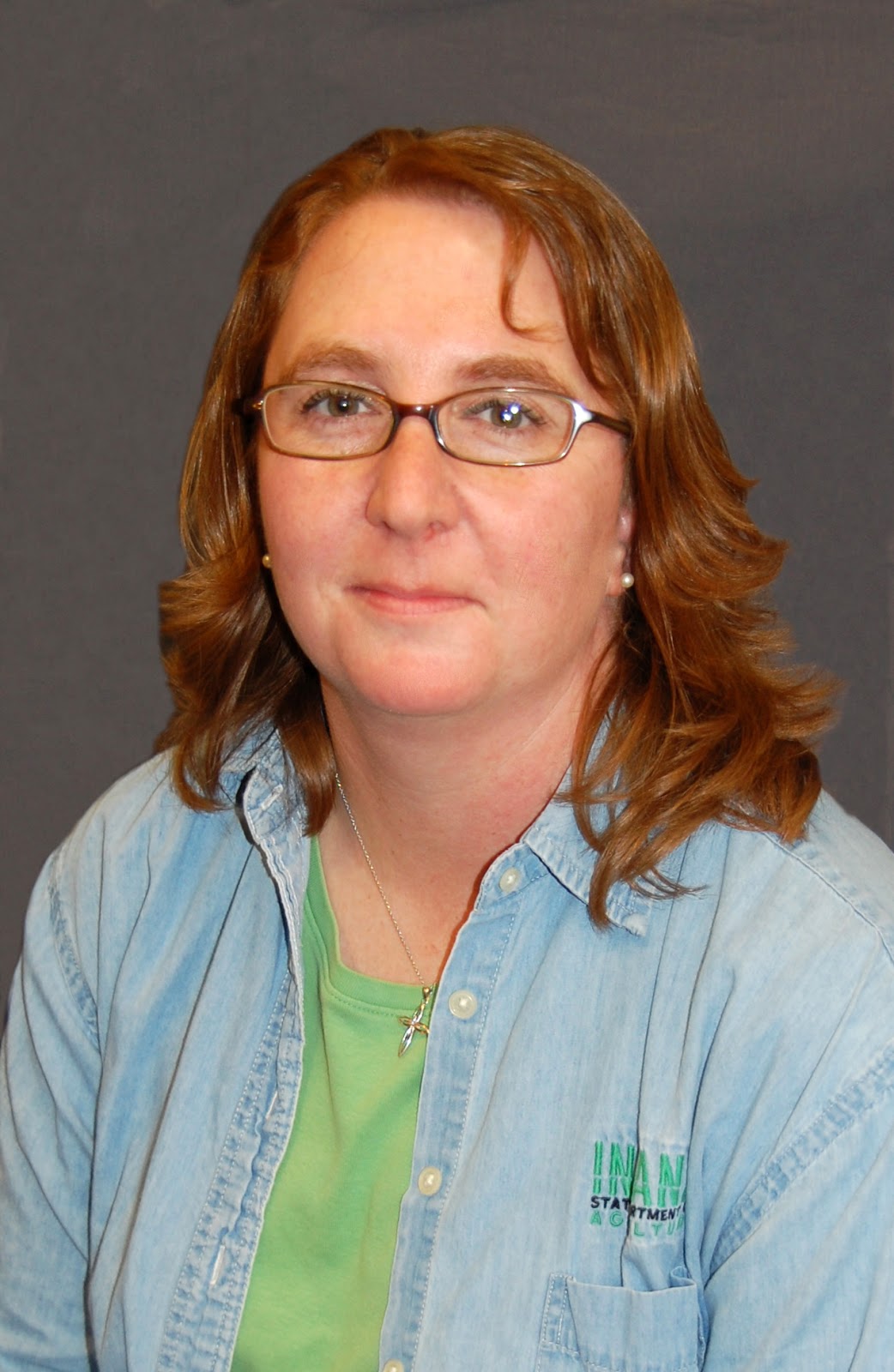
By Linda Powell
Resource Specialist

Linda Powell spent 15 years working on her vegetable and flower produce farm in western Vanderburgh county and finished a degree from USI in 2005 completing a BS in Biology with an emphasis in plant science.   Before taking the resource specialist position with Indiana State Dept of Agriculture, she spent two and a half years in Gibson county as a watershed coordinator for the district working on 319 grants for BMP installation.  Linda serves clients in South West Indiana Gibson, Posey and Vanderburgh Counties.


There are numerous farm markets and orchards in Vanderburgh County these days.   There has been tremendous growth in the availability of locally grown foods for people to enjoy.  The four markets featured here are just a few that we can show for our county.  They all produce most of the goods that they offer and they work very hard to produce good quality fresh produce.  Some are striving to increase their variety and are using equipment to extend their growing season to be able to offer  goods throughout the year.
Seton Harvest West of Evansville is an operating CSA

Seton Harvest Herb Gardens and Hoop Houses

Mayse Market on St Joseph Avenue Has Extended Season For Early Tomatoes

Mayse is a Family Operated Market

Reimans Market in Darmstadt


Reimans is Family operated

Bud’s Farm Market on the South Side

Bud Is Working to Extend His Season
For more information on farmer's markets in your area, please visit the ISDA website at www.in.gov/isda and click on "Local Foods and Agritourism". 

Wednesday, August 14, 2013

Red Gold Stewardship Award

 by Julie Harrold
Julie is a Resource Specialist Team Leader/CREP Leader in the north east part of Indiana. Julie's areas of Interest/Expertise include surveying; design of waterways, wetlands , structures, and working with landowners and SWCD’s. 


In 2009, the ISDA Division of Soil Conservation began working with Red Gold, Inc. to create a Conservation Stewardship Award Program for their tomato growers.   The program was established to showcase and recognize the conservation efforts taken by Red Gold Growers.  The goal of this award program is to highlight the current practices already undertaken by conservation minded-growers and to stimulate a proactive approach among all growers to evaluate their farm management practices and make improvements.
All Red Gold growers are eligible and encouraged to complete an initial application and all growers are provided an application form.  Once the initial applications are submitted, the applications are ranked based on the same criteria for every participant.  They are based on stewardship practices used to reduce soil erosion and improve soil and water quality, and practices used to reduce nutrient runoff and/or leaching and pesticide runoff and/or leaching.
At the end of May each year, the applications are due from all the growers who want to participate.  Then begins the process of reviewing and ranking those initial applications.  The top-ranking applications, typically the top 5, are chosen as finalists.  Each year in early July, I get the opportunity to visit 5 or 6 farms and visit with these producers that grow tomatoes for Red Gold.  I get to hear and see first-hand how they operate their farms and what good stewardship practices they are doing on their farms.  Through the past 5 years that ISDA has done this program with the growers, I have seen a lot of improvements in tillage practices, and in the use of more cover crops.  After I complete the farm visits, a ranking is done based on these visits and interviews. 
Tomato field

Chemical Storage Handling Facility


Filter Strip on ditch with tomato field in the background

Hay in cropping rotation
 In late July or early August, Red Gold has a field day for their growers followed by banquet serving a delicious pork chop dinner.  This year’s field day was held near Elwood, IN and featured several cover crop demonstration plots and some equipment demonstrations. 

Cover Crop plots at Field Day

At the field day, Barry Fisher from NRCS and Greg Downing from CISCO Seeds talked about cover crop benefits, types, termination, etc. and also showed soil pits in the cover crop plots.  Fred Whitford from Purdue did a presentation on tire and road safety for trucks and trailers, and insurance.  Ben Puehler from McDonnall Harvester did a presentation on tomato harvester equipment adjustments for improving tomato quality.

Barry Fisher speaking at Field Day


Fred Whitford talking to grower at Field Day

  
Following the field day, Red Gold holds an informal banquet to recognize the hard work of their growers and to talk about this years harvest and production.  The Stewardship Award is also presented at the banquet to the top two finalists.  First place receives a $1000 scholarship from Red Gold, a plaque, and one extra load of tomatoes per day during the harvest season, and second place receives a $500 scholarship from Red Gold and ½ extra load per day during harvest.  A Second Chance drawing is then held for the remaining Stewardship Award participants and includes a drawing for one extra load per day.  This year’s winners were both from Michigan.  First place went to Stanton Farms in Sherwood, Michigan and second place went to Iott Farms in Deerfield, Michigan.  
Way to go growers, and keep up the good work of being good stewards of our land!  Thank you to the growers and participants for your commitment to improve our soil, water and natural resources.


Monday, August 5, 2013

Conservation Cover: One Man’s Experience


Ed Roll is no stranger to Conservation Cover.  Not only has Ed served 25 years with the Indiana State Department of Agriculture Division of Soil Conservation as a Resource Specialist, he has also spent 30-years-and-still-counting working on his own farm.  Ed has spent that time practicing what he preaches to other land owners.  He regularly utilizes cover crops to replenish nutrients and increase soil health.


I regularly work with producers to get Conservation Cover on the land.  This process has recently been helped by utilizing Clean Water Indiana cost share funds.  I also serve as a member of the Conservation Cropping Systems Initiative (CCSI) South East Indiana Regional Hub which sponsors various educational events.
According to the Natural Resources Conservation Service website, interest in cover crops has skyrocketed over the past few years in the eastern Corn Belt.  Remarkably though, cover crops are an age-old practice for maintaining soil productivity.  They have been used for years to control erosion and improve water infiltration.   Cover crops also work to balance the biological community as well as many other environmental benefits.  (http://www.in.nrcs.usda.gov/ )
Planting a winter cover crop is a great way to improve soil health through the off-season.  While other land sits dormant, cover crops build fertility for the following year.  Cover crops can improve soil texture, boost organic matter, prevent erosion, suppress weeds, and provide food and shelter for beneficial insects.
Selecting the correct cover crop to plant is important.    It depends upon whether a producer wants to scavenge nitrogen or produce nitrogen for the next year’s row crop.  It can also depend upon the desire to conserve other nutrients and moisture.   The Midwest Cover Crops Council has a great website that can help you select cover crops to best fit your needs (www.mccc.msu.edu).
In general, there are two basic types of winter cover crops:
1) Those that grow vigorously in fall but are easily killed by cold temperatures (such as oats and radish in most areas of Indiana).   
2) Those that survive winter cold and resume growth in spring (such as clovers, winter rye and wheat).
The first kind is relatively easy to manage because they normally winter kill.  The trade-off is that you must sow these covers earlier to get adequate growth and maximum benefit before the plants are killed by the cold.  Oats and radishes are examples that should be sown by early September in the north and a couple weeks later in the south.   
The second kind of winter cover crop — those that overwinter and continue growing in spring — can be sown a bit later into fall.  This includes wheat, cereal rye or rye grass.  These crops will need to be terminated in the spring at planting time.
Seeding methods for cover crops may vary depending on the preferred seeding dates.  Some producers drill the seed or broadcast it after harvest.  Another option is to utilize aerial seeding while the primary crop is still in the field. 
My brother, Jack, and I utilize cover crops on part of our 1200 acres that we operate in southern Indiana.  We especially appreciate the benefits of erosion control, nitrogen scavenger, nitrogen producer, weed control and others.  We are careful to sow only the amount of cover crops that we know we can manage. 
Our cover crops are selected to match the next year’s crop, as well as the specific fields that will receive the greatest benefit.   Each year presents a new opportunity to try something different to see what works for us.   I am fortunate to have the opportunity to work with Indiana State Department of Agriculture-Division of Soil Conservation.  My work has provided me with a good knowledge and a renewed interest in cover crops.  This matches up well with my years of farming.
 In the summer of 2012, I selected a few fields that I was going to plant in corn for the 2013 growing season.  I decided that with the high cost of nitrogen I would see if I could produce some myself with the help of Crimson Clover.  I felt that clover was the best fit for my management system.  I considered aerial seeding, soil types, termination timing and cost.
I look at cover crops like a medical prescription and consider what side effects may be present.  I weigh out the “what ifs” that I need  to consider.  It’s important to remember that cover crop management is different for everyone.  You need to see what works for you.

Due to the wet spring I started no-tilling corn a couple weeks later than normal so that put  my Crimson Clover in full bloom which I believe marks the peak for producing nitrogen.  I allowed a couple of days to chemically burn down the clover and was still able to get my corn planted. 
As I continue to watch the crop progress, I have found that it was easier to terminate the Crimson Clover than I had thought.  Another benefit that I have noticed is weed suppression; I normally would have had to come back over this particular field to spray for weeds.  With the thick mat of clover, I eliminated the need for that pass.


Monday, July 15, 2013

Tracking Conservation Tillage Trends

 by: Laura Fribley, District Support Specialist, Indiana State Department of Agriculture


Scott County farmers are continuing the trend of plowing less of their land as they employ sound conservation practices that preserve valuable topsoil while making it all work toward a better bottom line.  Data from the 2013 Tillage Transect indicate that as a result of tillage practices on Scott County’s corn and soybean acres, an estimated 75,100 gallons of diesel fuel are saved compared to conventional tillage this year, and 121,100 tons of soil!

As Indiana farmers wrapped up planting, local conservation agency teams around the state conducted “Tillage Transect” countywide surveys.  The process identifies the types of tillage systems farmers are using and long-term trends of conservation tillage adoption. 

Conservation tillage leaves 30 percent or more crop residue cover such as stalks, leaves, and roots on the soil surface before and after planting.  “Conservation tillage helps keep the soil where it belongs: on the field.  This residue cover can help reduce soil erosion by 50 percent or more compared to bare soil.  This is good for our farmers, good for soil productivity, and good for healthy streams,” says Laura Fribley, Indiana State Department of Agriculture (ISDA).  Conservation tillage also includes a practice commonly known as “no-till”, where farmers directly plant into the previous crop with little disturbance.  No-till farming methods can reduce soil erosion by 75 percent compared to a conventional (chisel-disk) tillage system.
Indiana State Department of Agriculture’s Resource Specialist Ed Roll examines crop residue in a Scott County soybean field as part of the 2013 Tillage Transect survey.


In June, employees from ISDA, Scott County Soil and Water Conservation District (SWCD), and Natural Resources Conservation Service spent the day collecting data within the boundaries of Scott County.  Ed Roll, Resource Specialist with ISDA, has assisted with thirteen Scott County Tillage Transects since they began in 1990.  This experience, along with being a lifelong resident, has given him the perspective of watching conservation tillage grow over time.  “My brother and I started with no-till by renting a corn planter in the early 1980s, from Clark County SWCD and a no-till drill from Scott County SWCD as well,” says Roll.  “Over the years, a lot of agencies encouraged no-till, and a lot of local producers adopted these conservation tillage methods.  Scott County has always had a good amount, which is why we’ve been locally called the “No-till Capital of the World’”.   
 
One way of measuring residue cover is the line-transect method.  It involves counting the number of times a marked line intersects with a piece of residue.  Crop residue is important because it can help protect the soil from the impact and erosive properties of rainfall.
Indiana is the only state nationwide that still continually conducts the Tillage Transect, and the data is used by multiple agencies and publications.   For more information on conservation tillage trends within your county and around the state, please visit http://www.in.gov/isda/2383.htm or contact your local SWCD http://www.in.gov/isda/2370.htm .


Tuesday, July 9, 2013

The River’s Story Flowing By

By Nan Hammel


Nan is a Resource Specialist working in the Upper Eel River Watershed. Nan is a 2010 graduate of Purdue University, with a degree in Agricultural and Biological Engineering. 


It seems like the river, always has a way of bringing people together.  Maybe it’s the sound of the water rushin’ on by…or the chance to cast a line in hopes of the ‘big’ catch that does it.  Maybe skippin’ a rock or two over those sunlit rippling pools…or perhaps people just come down to the river to cross the bridge to get to the other side.


Well, this weekend in the Upper Eel River Watershed the small town of Roann held their annual pancake breakfast on the Roann Covered Bridge.  Folks don’t just come down to the river to cross the bridge, but to sit a spell with family and friends, eat a pancake or two, and sip a cup of coffee on Independence Day weekend.  For the small town of Roann, the covered bridge is a particular point of pride for gatherings such as these, as well as, their very own covered bridge festival held in September.  To folks around here, it’s important. 

On the same note, some folks may ask what’s so important about conservation and environmental stewardship.   Well, I reckon it’s important because it’s something we all share in.  When someone really gets conservation right the whole community benefits from that one landowner’s efforts, and when someone really gets it wrong the whole community is affected by the results.   Speaking of good conservation in addition to all the rain we’ve been having here lately, I was looking at a field just the other morning and the water running off of it was quite clear.  It was a no-till field that had cover crops planted on it last fall.  This was one of the first times that I had seen a real life demonstration of good conservation working on the land (since my first year on the job was last year’s drought!).  Every river tells a story about every acre of watershed in its reaches, the question is what story would you like to be told?  So next time you find yourself down at the river…for whatever reason, give it a thought.  And if you’re ever in the neighborhood on Independence Day weekend, please drop by and grab a seat on the bridge over the Eel River in Roann, Indiana.  We’d love to have you! 


I’d like to wrap up this blog with a verse from that good ole Hoosier poet, James Whitcomb Riley,

“The river's story flowing by,
Forever sweet to ear and eye,
Forever tenderly begun --
Forever new and never done.
Thus lulled and sheltered in a shade
Where never feverish cares invade,
I bait my hook and cast my line,
And feel the best of life is mine.”
~James Whitcomb Riley


Monday, July 1, 2013

Ft. Wayne River Fest Provides Opportunity to Help Educate Urban Residents About Agriculture Production and Ag Environmental Stewardship

By Jim Lake


Jim is a District Support Specialist in the northeast area of Indiana. Jim has been working in conservation for over 40 years, in which time he has not only dutifully served ISDA’s Division of Soil Conservation, but also has played a formative role in creating the national Conservation Tillage Information Center.  In his many years of dedication to conservation, Jim has also aided nearly every state in the US in creating plans for addressing non-point source water pollution.  He has managed the Allen County Soil and Water Conservation District and has been a leader at Purdue University’s agronomy department as a Soil and Water Conservation Education Specialist.


Each of the last two years the St. Joseph River, Upper Maumee River Watershed Project and St. Mary’s River Watersheds Groups have joined forces with the Allen County Soil and Water Conservation District, the Indiana State Department of Agriculture and cooperating agricultural producers and equipment dealers to provide educational displays at the Ft. Wayne River Fest. 

This year’s River Fest held Saturday, June 22 on the shoreline of the St. Joseph River at Fort Wayne’s Indiana-Purdue University Campus. The River Fest drew over 15,000 people. The River Fest is marketed as a family fun and educational day and primarily draws city and suburban residents of Ft. Wayne and suburb areas.  


A highlight at the event is the agricultural equipment display. This year, a large tractor, no-till soybean planter, precision sprayer and a grain combine were on display. Jim Lake, District Support Specialists for the Indiana State Department of Agriculture, has helped with the agricultural equipment display each of the last two years. The large equipment is a magnet for children who love to climb up into the cabs of the equipment. While the parents are waiting in line to help their children get up into the equipment, we have the opportunity to talk to the parents about agricultural production practices farmers are using to help protect and improve water quality of the river. We use this opportunity to talk about no-till planting and precision farming technology being used by farmers to reduce soil erosion and accurately apply fertilizer and other crop inputs. The folks in attendance, for the most part, have no current connection with farming, and at best remember going to their grandparent's farm when they were growing up.


I like to ask visitors to the equipment display what they think the equipment they are looking at costs. For example, when I ask what they think the combine costs many respond with a guess of about $100,000 and I tell them $450,000 including the grain head. They are shocked at the costs and the amount of money farmers have invested just in equipment.  I think it very important for those of us engaged in agriculture make efforts to educate our urban and city neighbors on the many aspects of agriculture including the conservation efforts Hoosier farms use in their day to day operations.    

Friday, June 28, 2013

Jordan Seger named director of ISDA’s Division of Soil Conservation


Jordan Seger has been named the new director of the Indiana State Department of Agriculture Division of Soil Conservation.

Seger, 26, has been a program manager in Agricultural and Environmental Affairs for the Soils division since April of 2012. He worked for a year with ISDA field staff prior to that. He attended Indiana University, from where he was graduated with a B.S. in Public Affairs. Seger grew up in the Jasper area and was involved with his family’s poultry operation prior to joining the department.
“I am very happy to announce Jordan’s appointment as director,” Director Gina Sheets said. “His service to the department, the agribusiness community and the state, have been invaluable. He brings a great combination of knowledge, understanding both the complexities of modern farming operation and the importance of environmental stewardship. He will continue to be a big part of the department’s effort to help landowners make sound conservation work in harmony with and toward a better business operation.”

Seger said he is happy to have the opportunity.
“I am excited to serve Indiana agriculture and the Administration in this new capacity, and I’m anxious to work more closely with the Ag industry and the ISDA field staff who work directly with farmers throughout the state,” he said. “Indiana is quickly becoming a national icon for conservation with local, state, and federal entities all working in partnership toward common environmental stewardship and profitable production goals. The ISDA – DSC will continue to work with landowners to ensure agriculture flourishes and Indiana farmers remain on the cutting edge with conservation technologies to help preserve our valuable resources.”

The ISDA Division of Soil Conservation works to increase agricultural economic benefits by assisting Indiana’s farmers in the application of advanced agronomic technologies while improving upon Indiana’s soil health and water quality.

For more information, contact Robert Ziegler at 317-690-3303 or rziegler@isda.in.gov