
Monday, December 13, 2010
Increased Soil Quality & Environmental Quality through No-till Planting

Wednesday, November 24, 2010
Images of Thankfulness
A picture is worth a thousand words! Today I have asked ISDA staff to submit images which showcase various things for which they are thankful. You could see their eyes light up in excitement and instant deep thought. By the time I returned to my desk the images started rolling in my Inbox. As I opened the pictures I began to laugh and get all of those warm fuzzy feelings, I hope you will too. I'm proud to present to you from the hearts of a few of our ISDA staff to you, Our ISDA Images of Thankfulness.







Wednesday, November 17, 2010
Making the World a Better Place
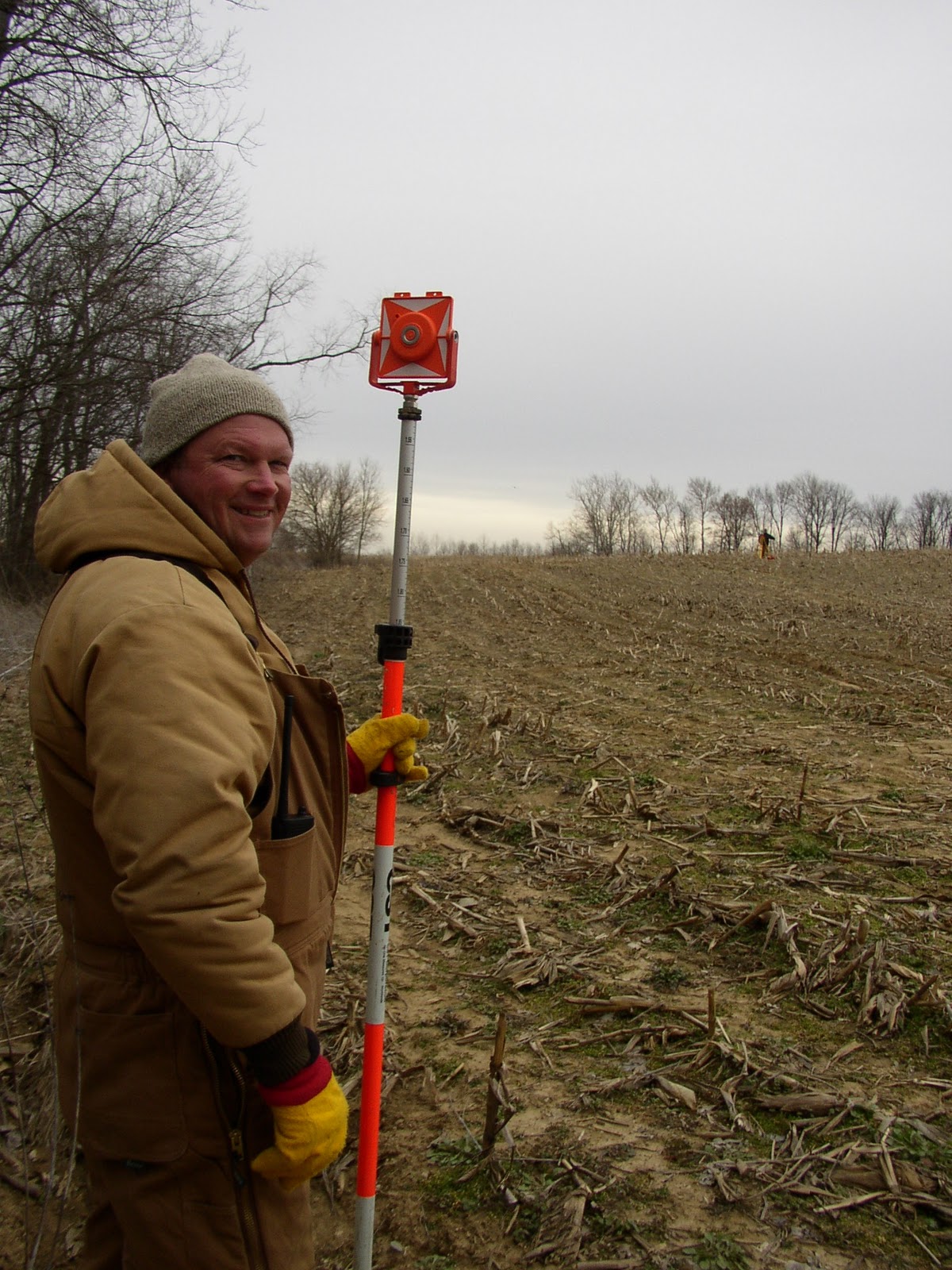 |
| George Reger, ISDA Resource Specialist... Happy Surveying! |
 |
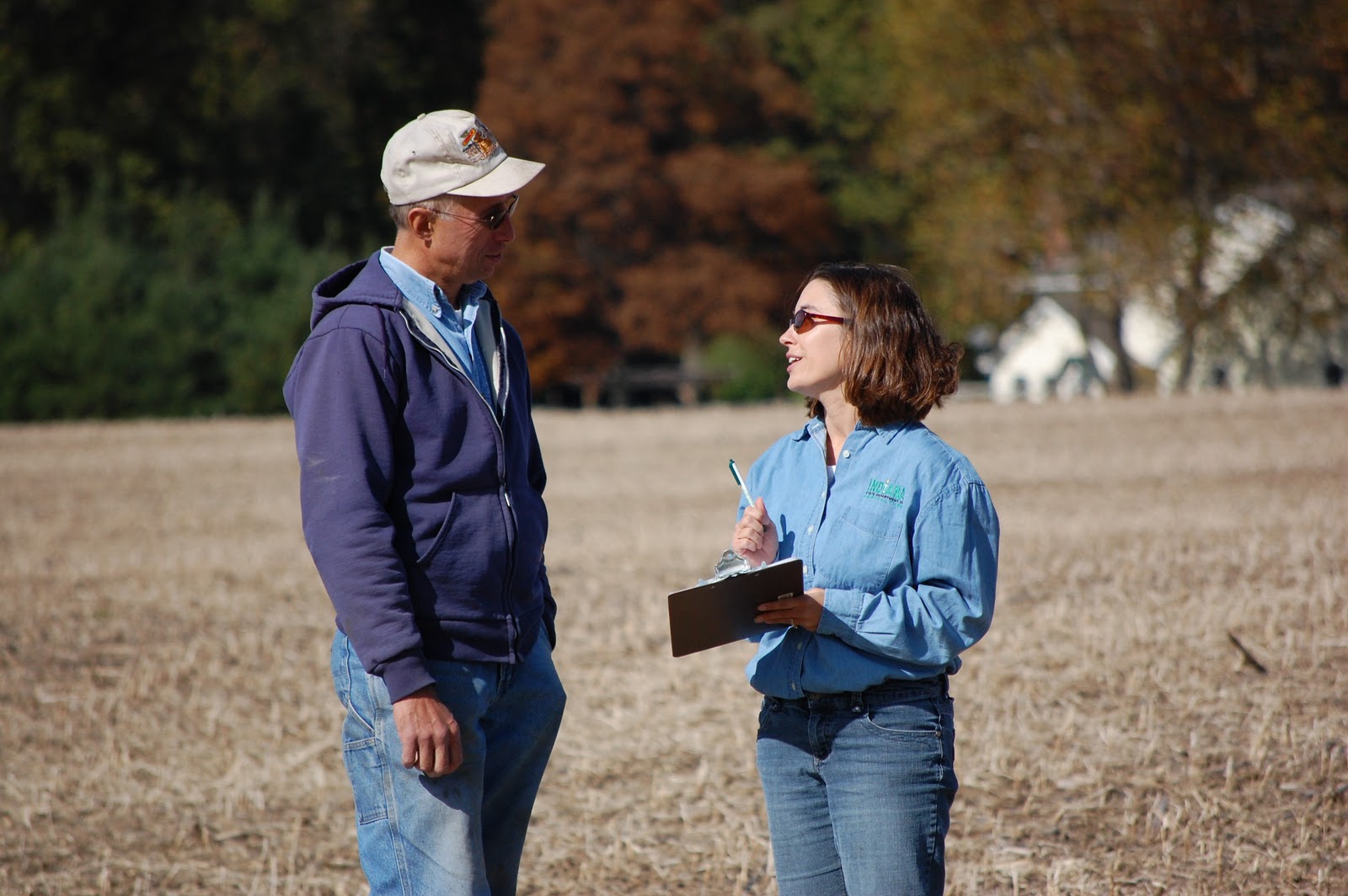
| Sarah Lake, ISDA Resource Specialist..... discussing conservation options with a farmer |
In a recent report from our 23 Resource Specialists, they are currently working on the survey, planning, and completion of over 130 miles of Grassed Waterways!!! Wow! If calculated, this would equate to thousands of tons of soil saved as well as thousands of pounds of phosphorus and nitrogen reduced from runoff as well(these are three components that can create significant water quality degradation). Not to mention the farmer who installs this practice is thrilled because he no longer has that uncrossable gully in his field.
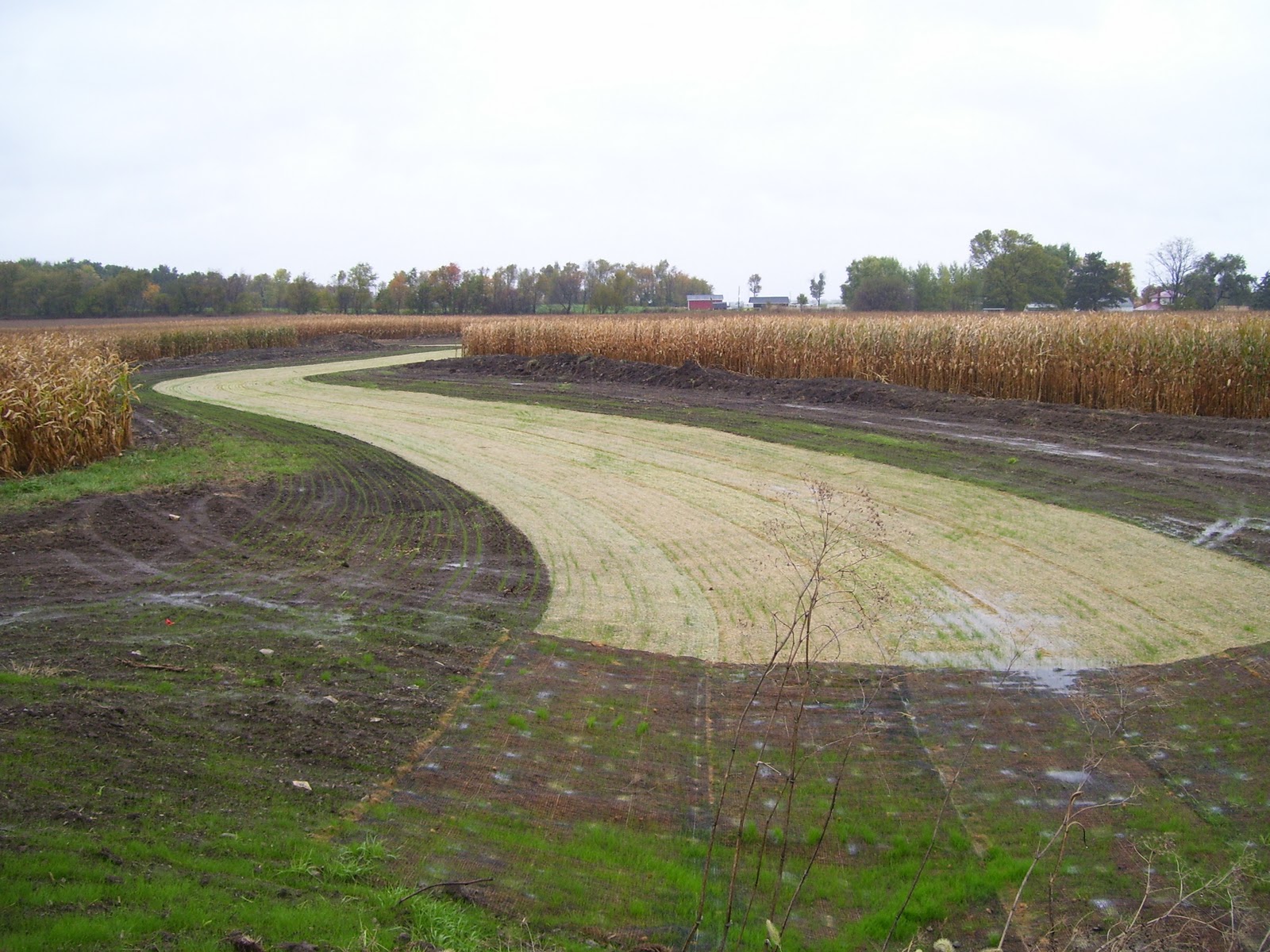 |
| Recently constructed Grassed Waterway, new grass coming up through erosion control blanket |
Grassed waterways solve gully erosion problems. Essentially you take that area in the field where water runs and it is starting make a channel from erosion(this is the gully) and you reshape that area to a designed width and depth, grow a dense vegetative cover(grass), and the erosion problem is gone. Along with washing priceless topsoil away, nutrients such as nitrogen and phosphorus can quickly be washed away in these areas as well. The Grassed Waterway eliminates the erosion and the grass acts as a filter for the nutrients.
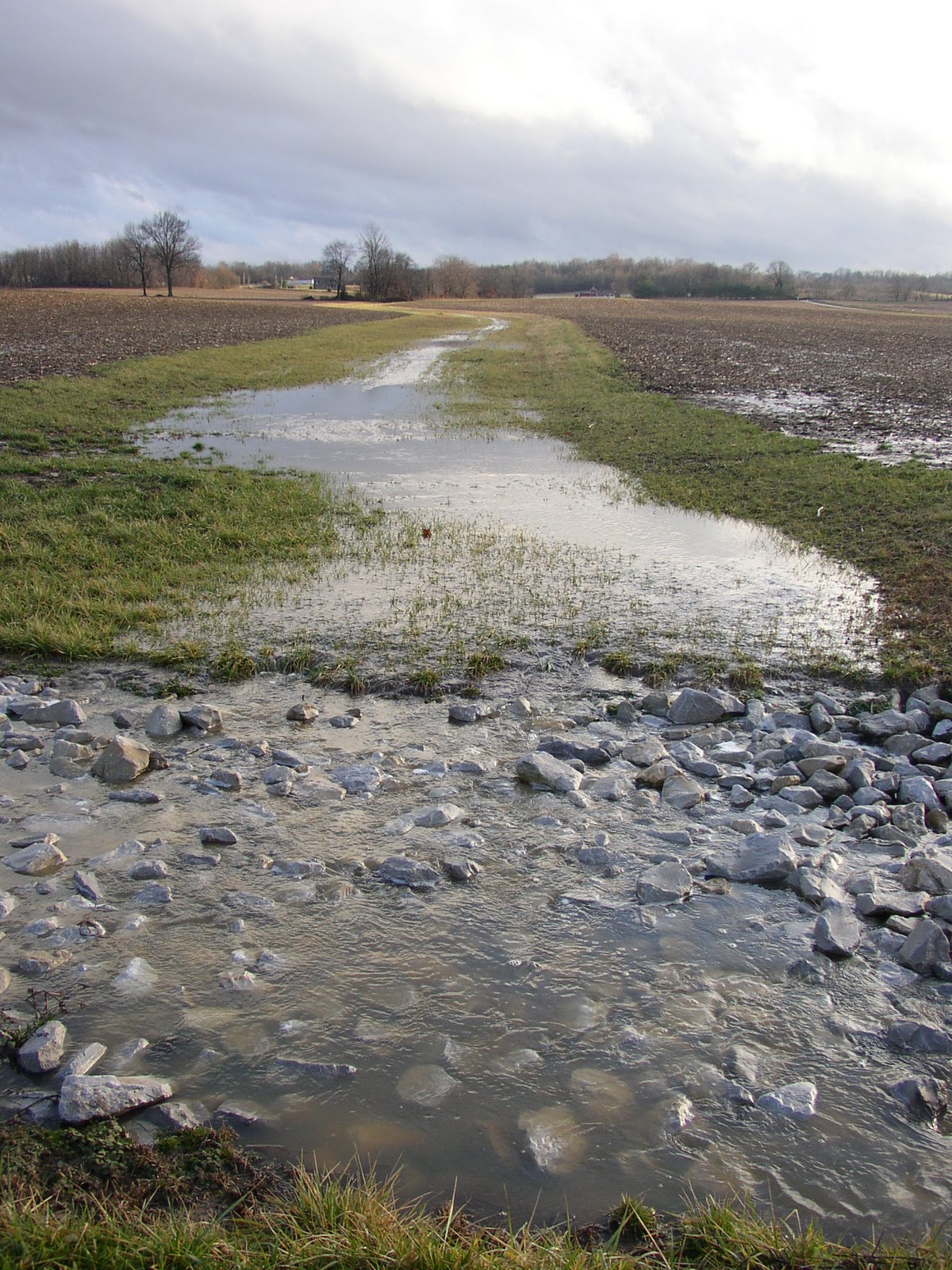 |
| Functioning Grassed Waterway |
Many thanks to our staff and State Soil Conservation Board who work out in the field, in the board rooms, and in the offices to bring conservation solutions to our lands.
Thank You!
 |
| Indiana State Soil Conservation Board |
Thursday, October 21, 2010
It's CREPtastic! Guest Post
 Sara Christensen serves ISDA as the State Conservation Reserve Enhancement Program (CREP) Coordinator, and works on watershed/water quality issues. Although she currently resides in downtown Indy, she uses her free time to escape to the natural places of Indiana. Originally from small town Ohio, Sara has embraced the Hoosier State and cares deeply for Indiana’s people and places. She is proud IUPUI alum, with a background in geology.
It's CREPtastic!
That’s the word on the street at the State Department of Ag lately. Well, okay, at least in my world. I’ve been working on CREP for the better part of the last two years. After many months of hard work in ISDA as well as FSA, the CREP amendment was finally signed and official on August 27th of this year. ISDA and FSA hosted a signing event at Mr. Mike Starkey’s farm in the Brownsburg area. Many of our conservation partner leaders were in attendance, including our own Lt. Governor Becky Skillman, ISDA‘s Director Joe Kelsay, USDA-FSA State Executive Director Julia Wickard, and many others. It was a fun day! Whew!

Let me start from the beginning, my beginning anyway. When I joined the staff at ISDA, CREP was available in three of Indiana’s HUC 8s and only in parts of 29 counties (What’s a HUC 8? Here’s a link!). By the way, Indiana contains or touches parts of 38 HUC 8s. The CREP amendment allows this program to increase its availability to 11 total watersheds touching 65 counties. Ok, great, so CREP is available in 11 watersheds? What is it? CREP – the Conservation Reserve Enhancement Program – is a program that provides financial incentives to landowners who voluntarily set aside some of their marginally productive or sensitive farm ground into certain natural resource conservation practices for 14-15 year periods. CREP funds come from the State of Indiana, as well as USDA Farm Service Agency. Additional technical and financial assistance comes from Natural Resource Conservation Services, The Nature Conservancy, and the White River Restoration Fund. Members of the Indiana Conservation Partnership, as well as other conservation groups, serve on the CREP coordinating and technical committees. So, CREP is most definitely a group effort!
 Native grasses (above) are one example of a CREP practice
CREP is designed to alleviate some of the nonpoint source sediments and nutrients leaving agricultural lands; improved water quality is a large constituent of this program. What are nonpoint source sediments and nutrients? Well, point source discharges are those that leave from a single source, such as a pipe. Nonpoint source discharges are basically everything else that leaves the landscape through overland flow. CREP also enhances wildlife habitat. So, let’s talk specifically about practices and what they do. Most of the practices available in CREP focus on “buffer-type” practices: native grasses, riparian buffers, filter strips, wildlife habitat, and hardwood trees. These types of practices do several things to enhance water quality. Grasses and other plants act as a filter; sediments and nutrients are filtered out of the water before they can enter a waterway, the water entering a buffer decreases velocity and drops particles, and plants uptake excess nutrients. The decreased velocity also allows more of the water to percolate through the subsurface, further filtering the water and allowing for groundwater recharge. Riparian buffers that include tree planting shade waterways, allowing for more species diversity due to the cooler water temperatures and additional places for species to thrive. These areas also allow for connected corridors, which many species need to be successful.
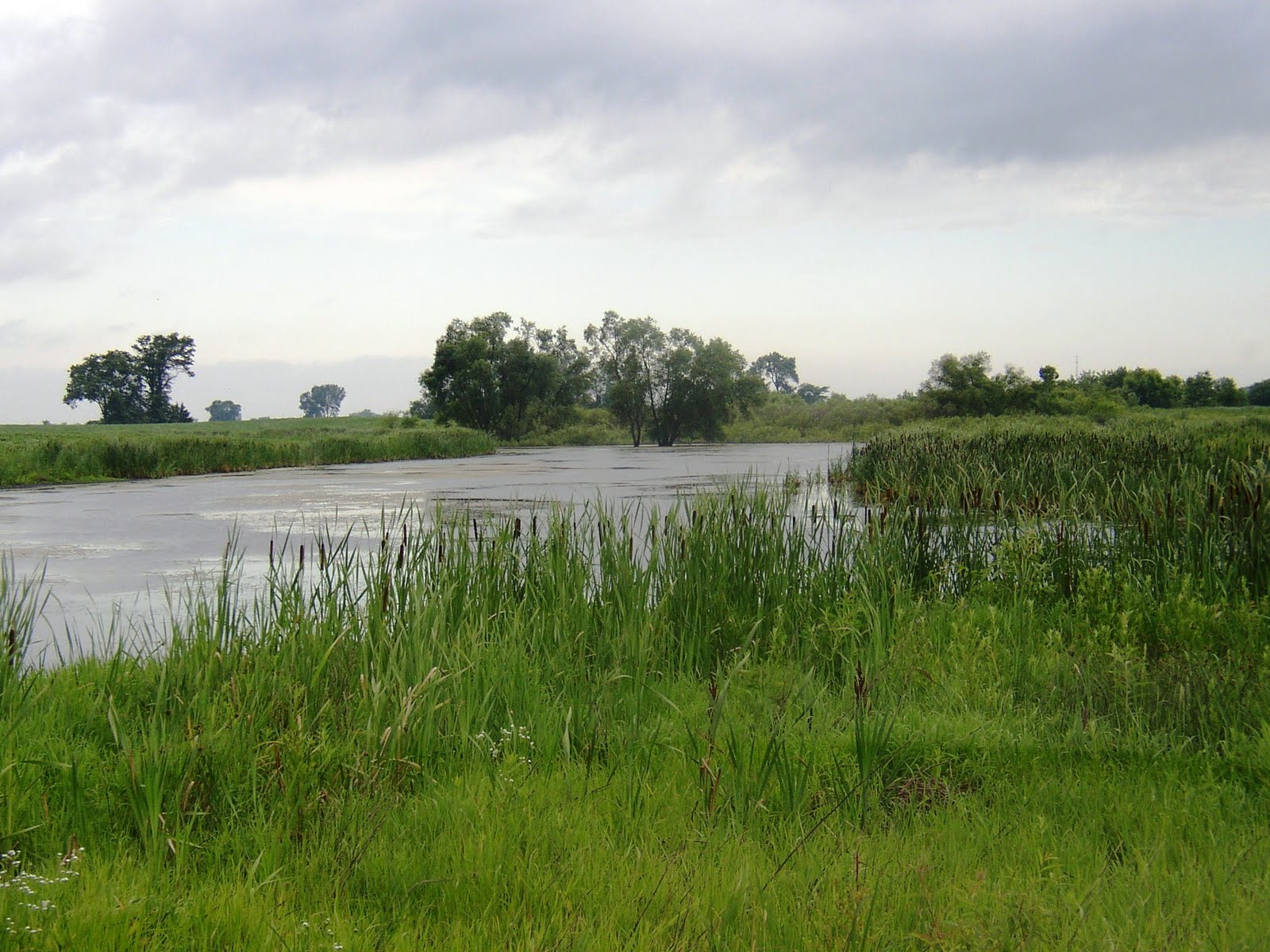
There are a few whole field practices available as well, including wetlands and bottomland tree plantings. These practices again slow down water flow, allowing sediments to drop, filtering to occur, and groundwater recharge. Wetlands in particular, allow for denitrification to occur (wetlands could be a whole other guest blog!), reducing the nitrates that enter our waterways (reducing Gulf Hypoxia – guess I’ll be writing a few more guest blogs!). Another benefit of these practices is the potential to mitigate water quantity issues (as opposed to quality). Wetlands hold large amounts of water, allowing water to slowly enter our waterways, helping to alleviate flooding and droughts. Mature trees uptake vast amounts of water, again, using water that would have directly entered an adjacent waterway. Just one more benefit - the majority of our State and Federally listed threatened and endangered species use these areas at at least some stage in the life cycle.
Financial benefits vary depending on practice and soil type, but include up to 90% cost share for certain practices and annual rental payments from FSA, and payments from $100-$950 per acre from the state. For more information, go to ISDA's website or visit your local Soil and Water Conservation District, and remember, it’s CREPTASTIC!
It’s CREPTASTIC!
Tuesday, September 28, 2010
Conservation Loans
Here is a recent release from USDA regarding low interest loans available for implementing conservation practices on the farm. This is just one of the many, many Farm Bill programs available to landowners for this type of work. In addition to this loan announcement, others offer incentives and cost-share opportunities to control erosion, minimize nutrient and sediment runoff, and generally give the farmers tools to enhance environmental stewardship and sustain productivity.
Indianapolis, September 13, 2010 - Julia A. Wickard, Executive Director for USDA’s Farm Service Agency in Indiana announced the launch of a Conservation Loan (CL) program that will provide farm owners and farm-related business operators access to credit to implement conservation techniques that will conserve natural resources.
“This will provide farmers, who want to implement conservation measures on their lands, a chance to do so by providing assistance with up-front costs,” said Wickard. “In return, these producers will help reduce soil erosion, improve water quality and promote sustainable agricultural practices.”
Direct CLs can be obtained through local Farm Service Agency (FSA) offices with loan limits up to $300,000. Guaranteed CLs up to $1,112,000 are available from lenders working with FSA.
CL funds can be used to implement conservation practices approved by the Natural Resources Conservation Service (NRCS), such as the installation of conservation structures; establishment of forest cover; installation of water conservation measures; establishment or improvement of permanent pastures; implementation of manure management; and the adaptation of other emerging or existing conservation practices, techniques or technologies.
For more information on the Conservation Loan program, contact a local FSA office or visit the FSA website at www.fsa.usda.gov.
Friday, September 17, 2010
Conservation on the Farm through Innovation
I love the TV show "How It's Made". For those who haven't seen it....you watch and learn super cool details about the processes involved in making all kinds of crazy things we use everyday - padlocks, ballpoint pens, and the baking/packaging of mass amounts of blueberry muffins in the same 1/2 hour show!
So, I got to thinking (yes, scary!), what does the everyday John Q. Public know and understand about the science and technology that is involved with farming today? That's a huge subject because agriculture is extremely advanced in many ways. Just think about a combine, this is a piece of machinery that has revolutionized our ability to feed the world. Without it we're manually chopping corn stalks and removing kernels from cobs or beans from pods. A combine can process 150 bushels of corn(roughly 1 acre of corn on average) as fast as the farmer drives across it. Impressive and it's been around for awhile.

So let's drill down into one small, but critically component of agriculture, Agronomy.
Here's the wiki on agronomy.....Agronomy is the science and technology of using plants for food, fuel, feed, fiber, and reclamation. Agronomy encompasses work in the areas of plant genetics, plant physiology, meteorology, and soil science.
Agronomists are the folks that understand the growing preferences and details about a great number plants utilized in farming operations. They also understand the associated soil science and many can give recommendations for the best way to prepare the soil for maximum yield of planted crops.
Here's a hypothetical scenario for a very basic ag operation.......So the farmer gets his seeds, corn or beans, doesn't matter. Throws them in the planter and puts the seed in the ground. Maybe puts out some fertilizer to help it grow. Plant matures and when it turns brown you jump in the combine and harvest. Easy breezy, right.
NOT QUITE.......
Let's try this again......
-- Calculated decisions must be made as to what crop to grow based on soil conditions, pest concerns, market outlook, and possibly weather. Corn requires more nitrogen in the soil to grow properly and soybeans happen to be a nitrogen producing crop. So, many times you'll see corn following soybeans the next year. This saves the farmer money by reducing some of the nitrogen costs and maximizes the nutrients in the soil.
-- Soil samples are pulled and tested regularly to determine whether the amount of nutrients and pH in the soil are sufficient for the crops to yield to their maximum potential. Certain soils are more productive than others. Since fertilizer application is costly and is an overhead cost that reduces profits, farmers utilize the soil tests to only put on the needed amounts of fertilizer. This minimizes costs, but also helps to ensure the runoff of excess fertilizer into surrounding waters is minimized. With GPS points and aerial digital photos of fields agronomists prescribe variable rates of fertilizer based on soils and past data from harvests(yes, combines today can give real-time yield data as the crop is being harvested).
--Now planting, many farmers have adapted their operations to minimize the amounts of "trips" they travel across the fields. This is to minimize fuel costs and help prevent soil compaction(crushed soil from heavy equipment is less productive) among many other reasons. Specialized planting equipment has been developed which can plant the seed at the exact depth, deliver all of the fertilizer it needs to get started right there, prepare ideal seed-soil contact, and leave the perfect spacing for maximum yield from it's neighboring seeds. This is all in one pass across the field. Did I mention that soil conditions such as moisture and temperature must be carefully considered along with the hybrid of seed that has been selected for planting(this is where the science and art of farming come together). It doesn't hurt to be able to predict the weather either!?
-- Corn, in many cases, will need an extra boost of nitrogen and the farmer monitors the growth stage of the plants and tries to apply nitrogen right when the plant needs it so that the plant utilizes all of this valuable nutrient and leaching is reduced. There are fertilizer application tools that can evaluate the color of the corn leaves while moving through the field and applying nitrogen at variable rates as needed, further improving efficiency! Agronomists also utilize plant tissue testing from various portions of the field to prescribe the correct rates of nutrients.
-- Harvesting. Farmers monitor the maturity of the crop, field wetness(avoiding driving a large combine over wet soil is a good idea for many reasons, including compaction), and kernel moisture. There is a premium for corn or beans delivered in an ideal moisture range(too dry and it can crack or be easily damaged, too wet and it could get moldy or rot easily). Timing is quite crucial for a good harvest.
-- Science tells us that our soil ecosystem is more diverse and potentially more productive when they are biologically active throughout the year. In other words, it's good to keep something growing in the soil to encourage good populations of worms and all of the critters in the soil that actually aid in ag production and conservation. So, we see many farmers turning to the utilization of cover crops. Simple grasses and legumes that control erosion, scavenge left over nutrients and keep them from leaving the field, help break-up compaction, provide better water infiltration....there's a multitude of benefits.
The agronomists and Certified Crop Advisors are trained to understand the science and help farmers maximize efficiency. The tools and methods for honing in on what is coined "Precision Farming" continue to grow. This certainly is not an all-encompassing list of the science and technology associated with agriculture. In fact, it is just a scratch at the surface of just row crop ag, what about animal agriculture which has had incredible advancements. It's certainly easy to see that the environment not to mention the world's population have benefited tremendously from agriculture's science and technological advancements. We consistently have continued to increase the yields per acre as well as become more efficient at growing. Bob Nielson - Professor at Purdue - Agronomy, "State average corn grain yield in Indiana has increased at a fairly constant 1.6 bushels per acre per year since 1930 primarily due to improved genetics and production technology." from Corn Yield Trends article online
Did I mention that tractors can drive themselves now, cool real-life demo?!!! Watch this.
Through growing programs such as the On-Farm Network the Indiana State Department of Agriculture is encouraging the utilization of technology and science to improve farm efficiencies and environmental stewardship. Much more to come regarding this program in the future. See the excerpt below...
The Indiana State Department of Agriculture’s (ISDA) project will utilize the “On Farm Network” approach developed by the Iowa Soybean Association. This project focuses on the use of nitrogen on agricultural crops and keeping the nitrogen in crop fields and out of streams. The network approach will gather information about how nitrogen is used by farmers in the watershed, comparing all the variables in type, timing, placement, soils, and yield. Participants can then compare, evaluate, and modify their own system to optimize yields, while reducing overall use of nitrogen and minimizing losses to surface and subsurface waters.
Tuesday, August 17, 2010
Growing Corn and Soybeans in Indiana
I ran across this video about one of our grain farming familys in Indiana.
Get To Know A Grain Farmer
Farmers have always been and are increasingly aware of the environment. As agricultural technology improves and we learn more from science on how we can be better stewards of the land, many farmers have adapted their management. As you view this short (under 3 minutes) video; note that they are planting soybeans in a field with standing corn stalks, i.e. no-till planting. These corn stalks have remained in field, providing a cover (commonly called residue) to minimize soil erosion, over the late fall, winter, and early spring. He mentions the use of filter strips (grass strips between the farm field and a stream/creek) and grassed waterways (a grassy strip that moves water safely off of the field minimizing gully erosion). These grassy areas help trap soil and any pesticides/fertilizers that may be carried off of the field during a rain. So, grab Hoosier-grown popcorn...dim the lights...and enjoy getting to know a grain farmer!
Subscribe to:
Posts (Atom)